
Emotional Connections: What can film teach us about branding and storytelling?
The Basic Intersection of Branding, Storytelling, and Emotion
At the most basic level, branding is communicating a message to your audience. A message that communicates the "emotional idea” or the “emotional promise” of your business. Really, it’s about how you make people feel. It’s “the why” behind all of the design choices that go into developing a brand. From color to shapes to typography. It’s all connected, and frankly, it's not much more complicated than that. Let’s quickly look at a few well-known brands and how their design choices evoke the desired emotion for their business.
AMC Theatres

When you see this logo, what do you feel? The solid red and deep black evoke that literal feeling of walking into a dark movie theater, with those all-too-comfy red recliners as you escape reality to immerse yourself in that movie you’ve been waiting to see for so long with a room full of strangers. AMC Theatres and Nicole Kidman aren’t so subtle in their marketing where they say “We come to this place for magic”. Through their branding, they want to evoke that magic of escapism.
Delta, United, Southwest Airlines



In the transportation industry, and especially the airline industry, what do these companies really want you to feel when you see their logo and branding? Trust, confidence, and reliability are pretty high up there as we more or less put our lives in their hands. What color is commonly used to convey these feelings? Blue. Some are bolder, some are more saturated than others, but all of these airlines' color palettes are based on some shade of blue to convey this feeling of trust and safety. Exactly why we feel this way, we’ll leave that up to the psychologists, but this design choice is no mistake.
Campbell’s
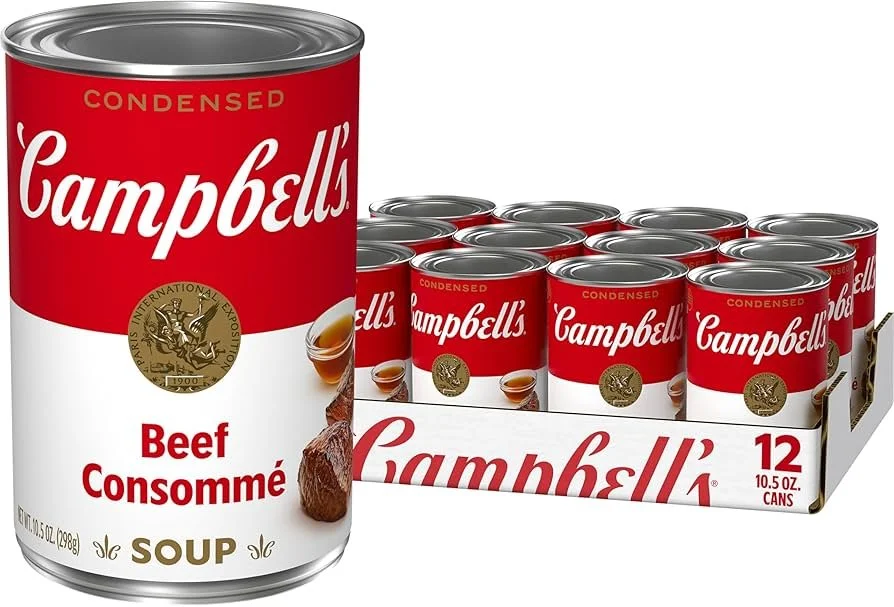
For over 125 years (since 1898!) Campbell’s has used this red top design for their classic soup options. The benefit of sticking to this design, more-or-less, through all these years? Nostalgia, trust, familiarity. It takes us back to our childhoods, having that warm bowl of chicken noodle soup on a cold day. We pick that little metal can with the red top in the grocery aisle because we want that familiar, literally and figuratively “warm” feeling again.
As you can see, all of these things are inherently intangible. If you showed each of these logos and brands to an alien from outer space, they probably couldn’t tell you exactly what they represent, but they can probably tell you how the design makes them feel (in their own incomprehensible to human ears alien language, of course). That’s branding.
All of this is well and good, but you may ask “how does storytelling play into branding?” It’s a lot simpler than you probably think. But first, we must define it.
What is storytelling?
To help us define storytelling, we turn to a quote from one of our favorite books on screenwriting and storytelling in general. According to Robert McKee from his book Story, “Storytelling is the creative demonstration of truth. A story is the living proof of an idea, the conversion of idea to action.”
With this definition in mind, it’s easy to see that branding and storytelling are incredibly intertwined. Branding is storytelling, distilling down the “truth” of your business into a tactile, emotional feeling in hopes that it drives your audience to action.
If you think about it then, the above examples, in essence, are telling a story to your brain. All those design choices, all of those carry deeply ingrained meanings to us on a very fundamental, subconscious level; They communicate to your brain “this is the truth of this business/product, this is how you should feel”. It all happens so quickly, though, so we don’t really register it as a "story." But it is.
What happens when a brand is given the opportunity to expand on that story in perhaps a more literal, “narrative” form of storytelling? That allows us, the target audience, to actually sit with and resonate with the truth of the brand on a deeper, more cognitive and emotional level. It allows us to take a step back and really understand what your company is, what it’s all about. The static, graphic elements of your brand tells a really quick, subconscious story, but longer-form, more “traditional” narrative storytelling allows you to expand on that even deeper!
Let’s take a look at two examples to see how it can be done.
Case Study: Champion ‘Reborn’
“Are you ready? It’s okay to feel afraid, but do not succumb”
This piece of branded storytelling, produced by Sypher Studios in 2018, arose at a time when Champion was going through a resurgence, a reclaiming of their identity as a figurative and literal “champion” within the sportswear and fashion industry. This particular ad, then, tells the story of a young athlete, an underdog, pushing through physical and emotional adversity to achieve and fight for greatness; to become a champion, not necessarily out there, but first and foremost within.
What is most interesting about this project is that, yes, we do see an athlete training and can infer that he is probably wearing Champion attire, but that isn’t the focus of this story at all. What is the focus? To bring us into the mindset of an individual that has that competitive edge, who has maybe felt counted out and dismissed by others, but has this ultimate desire to reclaim that greatness he knows he is capable and worthy of. This story taps into that feeling of being an underdog destined for greatness. Although this is a common theme in other ads from other athletic companies, it’s one that is so emotionally resonant. Most of us feel like we have something to prove.
That represents the truth of the Champion brand. The filmmakers on this project and the people at Champion weren’t concerned with highlighting the physical qualities of a specific product, but seemed to be more concerned with how people felt about their brand. They wanted people to see Champion as a rising underdog, and they wanted people to see themselves as part of that idea. The narrative storytelling in this project allowed the Champion brand to expand on the emotional truth of their business in hopes that an individual can resonate with it, with the truth of their brand.
Case Study: Toyota ‘What Matters Most’
“Together always, no matter the distance.”
The automobile industry. Every day we put a lot of trust and faith in these machines to help carry us and our loved ones from place to place. In this piece, produced by Saatchi & Saatchi, Toyota recognizes and acknowledges the importance of this trust, and places this acknowledgement of responsibility at the core of their brand. We want to trust that the cars that we and those we love drive, are produced with care and safety at the forefront.
What makes this story so effective is how the creatives at Saatchi & Saatchi and Toyota focused on the relationship, letting their cars often recede into the background as simply a supportive part of a character’s life (but not their whole life). What really matters, (“what matters most”) is the relationship between these two girls. As we watch them grow up in childhood through adulthood, we see how the cars Toyota makes help make sure that, despite the great length of time and distance, they can see each other and be together again. What this leaves us with is a feeling of humanity, trust, and certainty. We equate Toyota with these feelings because they tied their products to the human experience, where those feelings of trust and certainty are so vital to our human relationships.
Toyota took from their brand ideology “you are what drives us” and extracted that truth down to its core, to the most basic human level, essentially saying that if you care about your fellow humans, you should drive our cars, because we care about them too.
How to focus on your brand’s emotional truth
When you think about your brand, focus on the “emotional truth” of your business. Ask yourself, how do you want people to feel when they come across your brand? What kind of story do you want to tell? Using the answers to these questions as your north star will help guide you throughout not only the initial design process, but also the long-term development and elevation of your brand.
Keep it human. Use narrative, human-focused storytelling projects as a way to expand on and help your audience more deeply understand the “emotional truth” of your brand. By crafting stories that elevate the human alongside (or even better, above) your product or service, you equate your brand with the human experience, and therefore, can connect with your audience on a more personal level and foster a deeper, more long-lasting relationship with them.